

The Course
This course came about after my keynote at Health 2.0 Las Vegas April 2026. I was surprised by the number of people wanting to discuss peptides at length; the commonality was most healthcare providers had little idea about peptides in so far as safety, tolerability, contraindications, concurrent use with nutraceuticals and bloodwork. Whilst they had seen the hype on social media, and have been confronted with patients wanting access, their confidence to prescribe remains very low.
This course is designed to change that.
10 modules covering 16 peptides, discussing mechanism, dosage, hype, risk and safety, contradictions and clinical practice.
Designed specifically for new prescribers, the course provides solid educational framework to understand Peptide potential whilst clearly identifying risks.
This course does not recommend or promote any brand, nor offers a way to purchase peptides.
A number of the peptides discussed in the course are not FDA approved. The course if for educational purposes only.
What you will learn
This course provides a comprehensive, evidence-informed education in peptide therapeutics for clinicians. By completing all 10 modules, students will gain the following knowledge and competencies:
MODULE 1 — Introduction & Fundamentals
• Define peptides as short amino acid chains that mimic, augment, or inhibit endogenous signalling pathways
• Understand why most peptides require parenteral administration (rapid GI degradation and limited epithelial permeability)
• Recognise that peptides amplify existing physiology rather than replace it
• Apply the clinical framework: start slow, titrate up, and introduce one peptide at a time
MODULE 2 — Metabolic Peptides
• Compare Semaglutide (Ozempic/Wegovy), Tirzepatide (Mounjaro/Zepbound), and Retatrutide (investigational triple agonist)
• Understand once-weekly subcutaneous dosing with slow titration schedules (increases every 4+ weeks)
• Differentiate FDA-approved therapies from investigational agents and their respective dosing ranges
• Explain how incretin receptor pathways target appetite suppression, glycaemic control, and body composition
MODULE 3 — GH-Axis & Anabolic Peptides
• Describe Tesamorelin (Egrifta) as a GHRH analogue for HIV-associated lipodystrophy with fixed daily dosing
• Explain hCG (Pregnyl/Novarel) for gonadal steroid production and male hypogonadotropic hypogonadism
• Recognise the importance of estradiol monitoring with hCG due to gynecomastia risk from testosterone aromatisation
MODULE 4 — Mitochondrial Peptides
• Understand SS-31 (Elamipretide/Forzinity) and its role in stabilising cardiolipin for improved ATP efficiency and reduced ROS
• Describe MOTS-C as a mitochondrial-derived peptide that activates AMPK and promotes insulin sensitivity
• Know that MOTS-C is on the WADA and USADA Prohibited Lists — athletes must avoid it entirely
• Explain why SS-31 and MOTS-C should not be stacked together (overlapping mitochondrial pathways)
MODULE 5 — Repair & Regenerative Peptides
• Identify BPC-157 + TB500 as the “Wolverine” stack for tendon/ligament repair and gut mucosal healing
• Describe GHK-Cu as a copper peptide for gene-level remodelling, wound healing, and collagen synthesis
• Recognise copper toxicity risk with GHK-Cu and the WADA-prohibited status of TB500
• Understand that none of these peptides are FDA-approved and all lack robust human safety data
MODULE 6 — Immune, Metabolic & Specialty Peptides
• Understand SLU-PP for metabolic signalling and appetite modulation
• Describe Thymosin-α1 as an immune modulator and CJC-1295/Ipamorelin for GH release and body composition
• Know PT-141 (Bremelanotide) as an FDA-approved (with limitations) therapy for sexual dysfunction
• Describe KPV (Lys-Pro-Val) as an anti-inflammatory peptide often paired with BPC-157 for gut-focused protocols
MODULE 7 — Safety & Stacking
• Identify the four core safety labs: CMP, CBC, fasting glucose/HbA1c, and lipid panel
• Apply the three Golden Rules: one metabolic lever at a time; correct labs before escalation; cycle pathways, don’t layer chronically
• Use the FAST-FAIL Matrix: if any 2 of 5 markers fail (CGM unstable, IGF-1 high, estradiol off-range, ferritin <30 or >300, CK elevated), stop the stack
• Distinguish safe stacks (e.g., CJC-1295 + Ipamorelin, repair peptides) from dangerous combinations (e.g., 2+ appetite peptides, SS-31 + MOTS-C)
MODULE 8 — Contraindications
• Recognise pregnancy as an absolute contraindication across ALL peptide classes
• Identify class-specific absolute contraindications: MTC/MEN2 for incretins, active malignancy for GH-axis, WADA status for MOTS-C and TB500
• Screen for relative contraindications including pancreatitis, gastroparesis, autoimmune conditions, and copper overload before initiating therapy
• Understand that PT-141 is contraindicated in uncontrolled hypertension and recent cardiovascular events
MODULE 9 — Clinical Practice
• Apply mechanism-based, lab-guided prescribing principles to peptide therapeutics
• Understand physician disclosure requirements including FDA status, benefits, risks, and uncertainties
• Draft patient consent covering investigational status, limited long-term data, voluntary participation, and financial responsibility
• Interpret new prescriber confidence ratings: High (Semaglutide, Tirzepatide, Tesamorelin), Moderate (hCG, PT-141), Low/Very Low (all investigational peptides)
• Perform reconstitution math to calculate syringe units from concentration (mg/mL)
MODULE 10 — References & Closing
• Access the full evidence base: FDA prescribing information, published clinical trials, and peer-reviewed literature
• Recognise that this is an evolving field — new evidence may change recommendations; always verify against current labelling and literature
OVERALL LEARNING OUTCOMES
By the end of this course, students will be able to:
1. Explain the pharmacology, dosing, and clinical application of 15 peptide therapeutics across five major categories
2. Differentiate FDA-approved, investigational, and WADA-prohibited peptides and their regulatory implications
3. Order and interpret the core safety labs required for peptide monitoring (CMP, CBC, fasting glucose/HbA1c, lipid panel)
4. Apply the FAST-FAIL Matrix and Golden Rules to safely stack and cycle peptides
5. Identify absolute and relative contraindications across all five peptide classes
6. Practise responsible prescribing with proper patient consent, disclosure, and lab-guided dose escalation
7. Perform reconstitution calculations and interpret dosing schedules for clinical implementation
This course is for educational purposes only. It does not diagnose, treat, or provide individual medical advice. Content is intended solely for professional education and knowledge development.
Curriculum
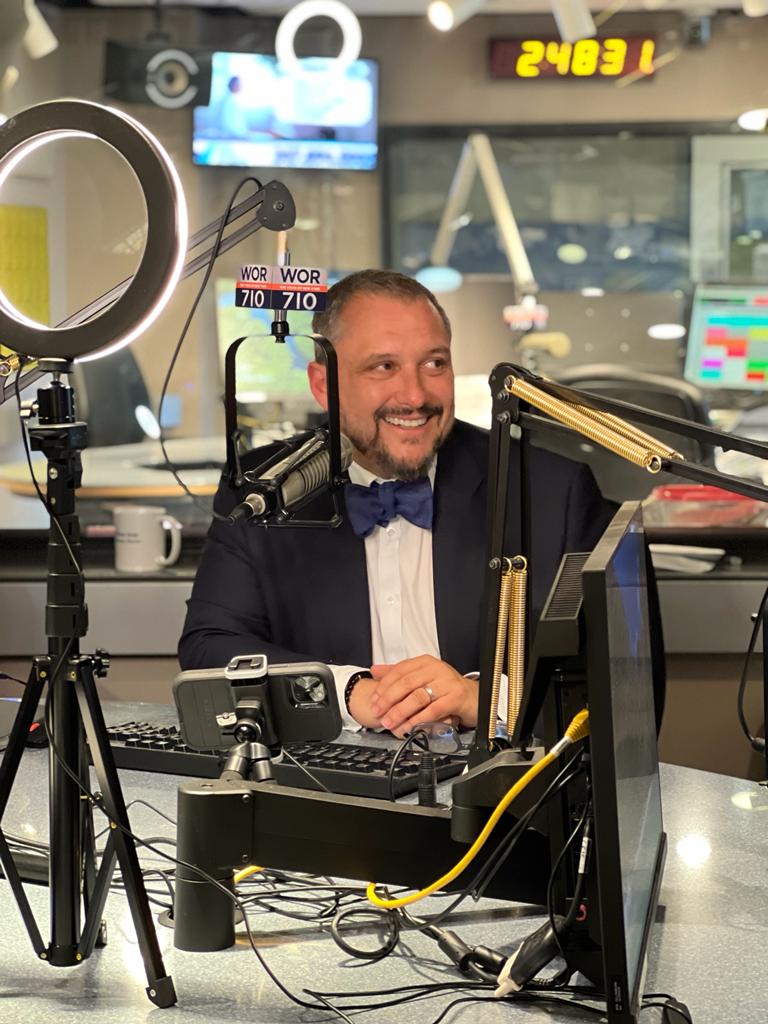
Your instructor: Dr Sean Hall MD, PhD, MBA, LTA
•Medical doctor and research physician with over 20 years dedicated to chronic illness, translational medicine, and emerging therapeutics
•Specialized focus on peptide science, human microbiome research, and evidence‑based clinical application
•Active researcher with an h‑index of 16 and ranked in the top 10% of contributors on ResearchGate
•Extensive experience across pharmaceutical development, clinician education, and research‑driven innovation
•Deeply committed to children’s charities and advocacy in rare and chronic disease communities
•Practice is research‑based only — I do not see patients outside of approved clinical trial settings
About this course
•Designed for:
•New prescribers of peptides
•Well or preventative‑focused clinicians seeking grounded, science‑based peptide education
•Provides foundational, evidence‑informed information to support responsible prescribing and clinical understanding
•Educational use only:
•This course does not diagnose, treat, or provide individual medical advice
Content is intended solely for professional education and knowledge development